Welcome to the world of crypto! At its core, cryptocurrency is a digital-only payment system that doesn’t rely on banks to verify transactions. Instead, it uses a decentralized network to keep things running.
Think of it as “internet money” that you truly own, without needing a middleman like a bank to tell you what you can or cannot do with it.
1. The Core Concepts
To understand how it all fits together, you need to know these four pillars:
Blockchain (The Ledger)
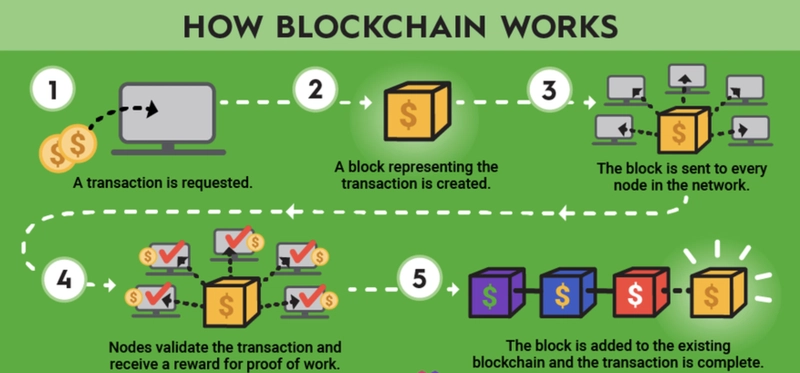
Imagine a digital notebook that everyone can see but no one can erase or change. This is the Blockchain. Every time someone sends crypto to someone else, that “page” in the notebook is shared across thousands of computers globally.
Decentralization
Most money (like Dollars or Euros) is “centralized,” meaning a central bank or government controls it. Crypto is decentralized—it’s run by the community and the software itself. There is no “CEO of Bitcoin.”
Cryptography (Security)
The “crypto” in cryptocurrency stands for cryptography. This is the advanced math that keeps your money secure. It ensures that only you can spend your coins and prevents anyone from “double-spending” or faking transactions.
Mining & Staking (The Engine)
Since there is no bank, someone has to verify the transactions.
Mining (Proof of Work): Computers solve complex puzzles to secure the network (used by Bitcoin).
Staking (Proof of Stake): Users “lock up” their coins to help verify the network in exchange for rewards (used by Ethereum).
2. Your “Starter Kit”
If you want to get started, you’ll encounter these three tools:
| Tool | Purpose | Example |
| Exchange | Where you buy crypto using “real” money (fiat). | Binance, Coinbase |
| Wallet | Where you store your “keys” (access to your coins). | MetaMask, Phantom |
| Private Key | Your digital “password.” Never share this. | 12-24 random words |
3. Important Rules for Beginners
Volatility: Prices can go up or down 10% in an hour. Never invest more than you can afford to lose.
Scams: If someone promises to “double your money” if you send them crypto, it is 100% a scam.
Self-Custody: If you lose your “Seed Phrase” (your backup words), you lose your money forever. There is no “Forgot Password” button in crypto.
Deep Dive Recommendation
Crypto for Beginners 2026 Guide This video is a great starting point as it explains the updated landscape of the crypto market in 2026 and how to set up your first account safely.

Best Beginner's Guide to Trading
Best Cryptocurrency Fundamentals For Beginners
Best Beginner’s Guide to Trading: Starting your trading journey requires a solid foundation in market mechanics, risk management, and psychology. While “trading” is a broad term, most beginners start by choosing between long-term investing, swing trading (holding for days/weeks), or day trading (buying and selling within the same day).
Comprehensive Foundations
For a complete overview of the modern market, these guides cover everything from setting up a brokerage account to reading basic price charts.
Stock Market Explained: A Beginner’s Guide by Andrew Aziz is highly regarded for its clear, non-technical language. It specifically breaks down the differences between investing and trading while providing a strong introduction to price action and candlestick charts.
Trading and Investing for Beginners by Ruben Villahermosa offers a deeper dive into technical methodologies like Price Action and the Wyckoff Method. This is an excellent choice if you want to understand the “why” behind market movements and professional strategies.
Focused Trading Strategies
If you have a specific interest in active trading styles, these books provide targeted roadmaps for short-term market participation.
A Beginner’s Guide to Day Trading Online by Toni Turner is a national bestseller that focuses on precision entries and exits. It is particularly useful for learning about newer trading products like ETFs and E-minis.
A Beginner’s Guide to Short-Term Trading helps beginners move away from the “buy-and-hope” mentality. It provides a common-sense approach to swing trading, teaching you how to hold positions for 3 days to 3 weeks to maximize gains from trend shifts.
Trading Foundations for Beginners emphasizes a rules-based strategy built on supply and demand. It is designed to help you build the essential skills needed to stay disciplined before you risk real capital.
Summary for Beginners
If you are completely new, start with Stock Market Explained to learn the vocabulary and basic mechanics. If you already understand the basics and want to start active trading, A Beginner’s Guide to Day Trading Online offers the most structured path for modern electronic markets.
Cryptocurrency Wallet
Best Cryptocurrency Fundamentals For Beginners
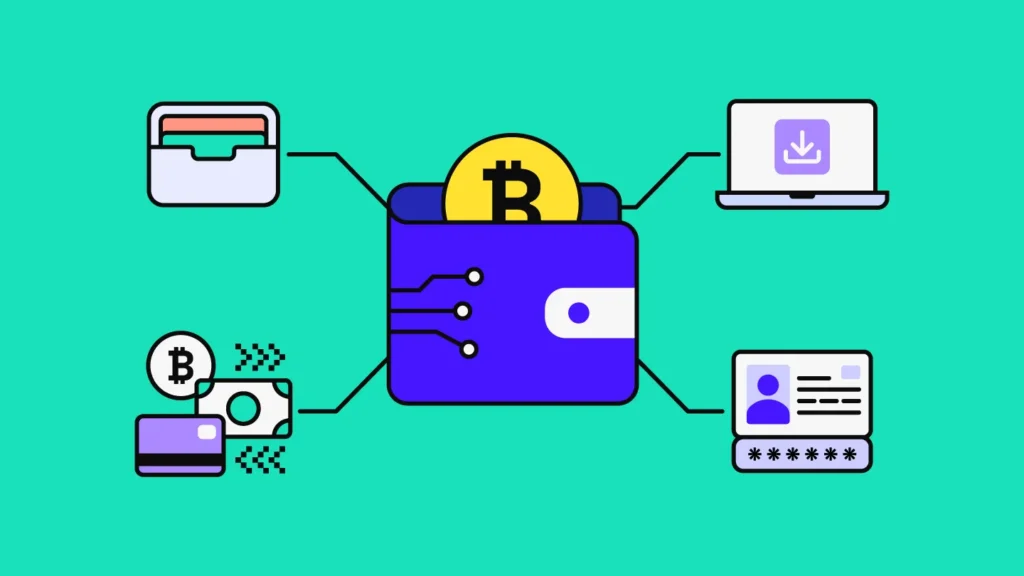
Cryptocurrency Wallet: A cryptocurrency wallet doesn’t actually “store” your coins. Instead, it stores the private keys that prove you own your assets on the blockchain. Without these keys, you can’t move or spend your crypto.
To choose the right one for 2026, you need to decide between convenience and maximum security.
1. The Big Divide: Hot vs. Cold
| Feature | Hot Wallets (Software) | Cold Wallets (Hardware) |
| Connection | Always connected to the internet. | Stored offline (physical device). |
| Best For | Daily trading, small amounts, NFTs. | Long-term savings, large amounts. |
| Cost | Usually free. | $50 – $200+. |
| Risk | Vulnerable to hacks and malware. | Physical loss or damage to device. |
2. Top Picks for 2026
Best for Beginners: Coinbase Wallet or Trust Wallet
These are “hot” mobile apps. They are incredibly user-friendly and feel similar to a banking app.
Why: They support almost every major coin, allow you to buy crypto with a card, and have built-in browsers for Web3 apps and NFTs.
Note: Don’t confuse Coinbase Wallet (which you control) with the Coinbase Exchange (where they hold the keys for you).
Best for Power Users: MetaMask or Phantom
If you are diving into DeFi (Decentralized Finance) or trading on various networks like Ethereum or Solana, these are the industry standards.
MetaMask: The “OG” browser extension for Ethereum-based chains.
Phantom: Known for its slick interface; originally for Solana but now supports Ethereum and Bitcoin.
Best for Maximum Security: Ledger Nano X or Trezor Safe 5
These are physical “cold” devices. Even if your computer is infected with a virus, a hacker cannot steal your funds because the “send” button must be physically pressed on the device.
Ledger Nano X: Great for mobile users because it has Bluetooth.
Trezor Safe 5: Famous for being fully open-source, which many “crypto-purists” prefer for transparency.
3. The Golden Rules of Safety
Seed Phrase is Everything: When you set up a wallet, you’ll get 12–24 random words. This is your master key. If you lose it, your money is gone forever. If someone else sees it, they can steal everything.
Never Digitalize Your Seed: Do not take a photo of it, save it in Notes, or email it to yourself. Write it on paper and hide it.
The “Exchange” Trap: Keeping your money on an exchange (like Binance or Kraken) is convenient, but if the exchange goes bust or gets hacked, you may lose everything. As the saying goes: “Not your keys, not your coins.”
Cryptocurrency Mining
Best Cryptocurrency Fundamentals For Beginners
Cryptocurrency Mining: In 2026, cryptocurrency mining has evolved from a hobbyist “gold rush” into a highly professionalized industry. While the era of mining Bitcoin on a laptop is long gone, new hardware and “merged mining” strategies have opened up unique opportunities for those who know where to look.
Here is the current state of mining as of March 2026.
1. Top Coins to Mine in 2026
Profitability today is determined by your hardware type. You can no longer mine everything with one machine.
| Hardware Type | Best Coins to Mine | Why? |
| ASIC (Specialized) | Bitcoin (BTC) | High competition, but the most liquid and secure asset. |
| ASIC (Scrypt) | LTC + DOGE | Merged Mining: You can mine Litecoin and Dogecoin simultaneously on one machine without extra electricity. |
| GPU (Graphics Card) | Ethereum Classic (ETC) | The “go-to” for GPU rigs since Ethereum 1.0 moved to Proof of Stake. |
| GPU (Gaming PC) | Ravencoin (RVN) / Kaspa | Designed to be ASIC-resistant, meaning home gamers can still compete. |
| CPU (Processor) | Monero (XMR) | Specifically built to only be efficient on standard CPUs, preventing industrial takeovers. |
2. The 2026 “Hardware Heavyweights”
If you are buying equipment today, efficiency ($J/TH$) is more important than raw power ($TH/s$). High energy prices have made older machines like the S19 series largely obsolete unless your power is free.
The King of Efficiency: Antminer S23 Hyd (~$1.16$ PH/s). It uses hydro-cooling to reach an efficiency of $9.5$ J/TH, making it the gold standard for 2026.
The Home Favorite: Canaan Avalon Nano 3. A small, quiet miner ($45$ dB) that looks like a portable hard drive. It mines small amounts of BTC while acting as a desk heater.
The Scrypt Monster: Antminer L9. Currently the most profitable way to merged-mine Litecoin and Dogecoin.
3. The 3 Golden Rules of 2026 Mining
I. Power is Your Real Product
You aren’t just a “crypto miner”; you are an energy arbitrageur. In 2026, successful miners look for power under $0.06$ per kWh. Many now use “curtailable” power—buying excess energy from wind or solar farms that would otherwise go to waste.
II. Use the “Waste” Heat
In the current market, mining is often only profitable if you use the heat.
Residential: Using miners to heat your home or garage during winter.
Industrial: Using miner exhaust for greenhouses, timber drying, or heating commercial warehouses.
III. Join a Pool (Don’t Solo)
Unless you own a warehouse full of machines, Solo Mining is like playing the lottery. Pool Mining (via SlushPool, Foundry, or F2Pool) allows thousands of miners to combine their power and split the rewards proportionally, ensuring you get a small payout every few hours rather than nothing for years.
4. Mining vs. Staking
Many of the world’s largest coins (Ethereum, Solana, Cardano) no longer use mining. They use Staking.
Mining (Proof of Work): Uses physical energy and hardware. Best for those with cheap electricity.
Staking (Proof of Stake): Uses capital. You “lock up” your coins in a wallet to earn ~4-7% APY. It requires zero hardware and zero electricity.
In the world of cryptocurrency, a mining pool is a collaborative group of miners who combine their computational resources (hashrate) over a network. By working together, the group increases its mathematical probability of solving a block and earning the associated reward, which is then split among participants based on their contribution.
Top Mining Pools for 2026
Depending on your hardware and goals, these are the most reputable pools currently leading the market.
Foundry USA: Currently the largest Bitcoin mining pool by hashrate. It is an institutional-grade, U.S.-based pool known for extreme payout stability and regulatory alignment. While it’s the “gold standard” for reliability, it is often geared toward professional or industrial-scale miners rather than small hobbyists.
AntPool: Operated by Bitmain, this is one of the most versatile pools. It supports a wide variety of coins (BTC, BCH, LTC, ZEC, etc.) and is highly optimized for Antminer hardware. It offers flexible payout models like PPLNS (0% fees) and PPS+ (predictable but higher fees).
Binance Pool: Best for users who want low fees and seamless integration. Since it’s tied to the Binance exchange, rewards are deposited directly into your exchange wallet, making it easy to trade or stake your earnings immediately.
F2Pool: One of the oldest and most trusted “multi-coin” pools. It supports over 40 different cryptocurrencies, making it the top choice for miners who use GPUs and want to switch between different altcoins like Ethereum Classic (ETC) or Zcash (ZEC).
Kryptex: Widely considered the best for beginners. It provides a simple Windows-based application that automatically detects your hardware and mines the most profitable coin, paying you out in Bitcoin or fiat currency.
Comparison of Popular Mining Pools
Pool Name Best For Typical Fees Payout Methods Foundry USA Institutional/Large-Scale ~2.5% (Embedded) FPPS AntPool Payout Flexibility 0% – 4% PPS+, PPLNS, SOLO Binance Pool Low Fees & Trading 0% – 2.5% FPPS, PPS+, PPLNS F2Pool Multi-Coin Variety 1% – 3% PPS, PPLNS Kryptex Absolute Beginners 1% – 3% PPS+, PROP How to Choose the Right Pool
When selecting a pool, keep these three critical factors in mind:
Payout Method:
PPS (Pay Per Share): You get a fixed rate for every “share” you contribute. It’s the most stable but usually has higher fees.
PPLNS (Pay Per Last N Shares): You only get paid when the pool actually finds a block. This is better for long-term miners as fees are lower.
Pool Fee: Most pools charge between 1% and 3%. Some exchange-backed pools offer 0% fees for specific promotional periods.
Minimum Payout Threshold: If you are a small miner, look for a low threshold (e.g., 0.001 BTC). If the threshold is too high, it might take months before you can actually withdraw your earnings.
Exchanges Trading Platforms
Best Cryptocurrency Fundamentals For Beginners
Exchanges Trading Platforms
In 2026, the landscape for trading platforms has shifted toward “all-in-one” financial hubs. Most top-tier platforms now offer a combination of stocks, ETFs, and cryptocurrency, though specialized exchanges still provide the deepest tools for active traders.
Top Trading Platforms for 2026
These platforms are the most highly rated for their reliability, fee structures, and specialized features.
Kraken: Widely considered the best overall crypto exchange for 2026. It balances an intuitive interface for newcomers with Kraken Pro, which offers some of the lowest spot trading fees and advanced market data widgets for professionals.
Coinbase: The “gold standard” for absolute beginners. While its fees can be higher than competitors, its security reputation and educational “Coinbase Learn” modules make it the safest entry point for new investors.
Robinhood: Best for zero-commission trading across stocks and crypto. It is the top choice if you want to manage traditional investments and digital assets in a single, simple mobile app.
Fidelity: A powerhouse for long-term investors. It offers a rare mix of high-end research tools, $0 commissions on stocks, and a growing crypto segment, all backed by institutional-grade reliability.
Interactive Brokers (IBKR): The premier choice for professional day traders. Its Trader Workstation (TWS) platform provides institutional-level access to global markets, futures, and complex options strategies.
Essential Gear for New Traders
Trading from an exchange is only half the battle; securing your assets and optimizing your workspace are just as important.
Hardware Wallets for Security
If you plan to hold significant amounts of cryptocurrency, “cold storage” is essential to keep your private keys off the internet and safe from exchange hacks.
The Ledger Nano S Plus is an affordable, high-security entry point that supports over 5,500 assets.
For mobile-first users, the Ledger Nano X adds Bluetooth connectivity so you can manage your portfolio from your phone.
The Trezor Safe 3 is a top-rated open-source alternative known for its resistance to physical brute-force attacks.
Trading Setup & Education
Optimizing your physical environment can help with the mental discipline required for active trading.
Education: Trading and Investing for Beginners is a highly-rated guide that covers the “Wyckoff Method” and essential risk management.
Setup: A Large Trading Desk Mat featuring chart pattern cheat sheets serves as a quick physical reference while you are analyzing live markets.
Comparison Summary
| Platform | Best For | Stock Fees | Crypto Selection |
| Kraken | Advanced Crypto | N/A | 450+ |
| Coinbase | Beginners | N/A | 250+ |
| Robinhood | All-in-One / No Fees | $0 | 35+ |
| Fidelity | Reliability / Research | $0 | Limited |
| IBKR | Professional Day Trading | $0 (Lite) | Growing |
Cryptocurrency do's and don'ts beginner guide
Best Cryptocurrency Fundamentals For Beginners
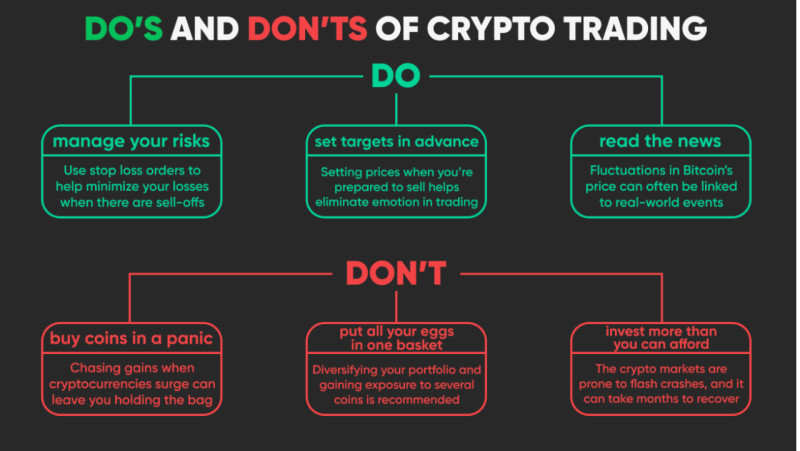
Cryptocurrency do’s and don’ts beginner guide: Welcome to the world of . It’s an exciting space, but it’s also the “Wild West” of finance—meaning there are no “undo” buttons and no bank managers to call if you make a mistake.
In 2026, the tools are better than ever, but the risks remain. Here is your essential guide to navigating the space safely.
🟢 The “Do’s” (Best Practices)
1. Own Your Keys (Self-Custody)
In crypto, there is a famous saying: “Not your keys, not your coins.” If you keep your money on an exchange (like Binance or Coinbase) and they go bankrupt or get hacked, you could lose everything.
Do use a Hardware Wallet (Cold Storage) for any amount you plan to hold long-term. Popular 2026 options include the Ledger Nano X, Trezor Safe 7, or Bitkey.
Do write your Seed Phrase (the 12–24 words) on paper or stamped metal. Store it in a fireproof, physical safe—never on your phone or computer.
2. Practice “Tiny” Transactions
Do send a “test” transaction of a small amount (e.g., $5) before moving your entire portfolio. Once you confirm it arrived safely, then send the rest.
3. Use Strong “2FA” (But Not SMS)
Do enable Two-Factor Authentication (2FA). However, avoid SMS 2FA, as “SIM-swapping” (where hackers steal your phone number) is a common attack.
Do use an app like Google Authenticator, Authy, or a physical security key like a YubiKey.
4. Dollar-Cost Average (DCA)
Do invest small amounts at regular intervals (weekly or monthly) rather than trying to “time the market.” This smooths out the impact of crypto’s wild volatility.
🔴 The “Don’ts” (Common Pitfalls)
1. Don’t Fall for “Fattening the Pig” (Pig Butchering)
Don’t trust strangers on dating apps, Telegram, or WhatsApp who start talking about “guaranteed crypto returns.” These are sophisticated long-term scams designed to build trust before stealing your life savings.
2. Don’t Store Your Seed Phrase Digitally
Don’t take a screenshot, save it in Notes, or email it to yourself. If your iCloud, Google Drive, or phone is hacked, your crypto is gone instantly.
3. Don’t Chase “Hype” or “Moonshots”
Don’t buy a coin just because a celebrity or influencer posted about it. Most of these are “Pump and Dump” schemes where the creators sell their coins to unsuspecting beginners, leaving them with worthless tokens.
4. Don’t Google Your Wallet’s Website
Don’t search for “MetaMask” or “Coinbase” on Google and click the first link. Scammers buy ads that look identical to the real site but are “phishing” clones.
Do bookmark the official URL once you’ve verified it and only use that bookmark.
🛡️ Quick Security Checklist
| Item | Action |
| Recovery Phrase | Stored on paper/metal, never digital. |
| Exchange Account | 2FA enabled (App-based, not SMS). |
| Wallet Connection | Only connect to reputable dApps; disconnect after use. |
| Unknown Links | Never click “Airdrop” links from random DMs. |
Best Cryptocurrency Fundamentals For Beginners
Best Cryptocurrency Fundamentals For Beginners: A Complete Guide
Cryptocurrency has transformed the way people think about money, investing, and digital ownership. For anyone entering this space, understanding the Best Cryptocurrency Fundamentals For Beginners is essential before making any decisions. This guide breaks down the core concepts in a simple, practical way so you can build a strong foundation and avoid common mistakes.
What Is Cryptocurrency?
At its core, cryptocurrency is a type of digital or virtual currency that uses cryptography for security. Unlike traditional money issued by governments, cryptocurrencies operate on decentralized networks powered by blockchain technology.
Learning the Best Cryptocurrency Fundamentals For Beginners starts with understanding that cryptocurrencies are not controlled by a central authority like a bank. Instead, transactions are verified by a distributed network of computers.
Understanding Blockchain Technology
Best Cryptocurrency Fundamentals For Beginners
Blockchain is the backbone of cryptocurrency. It is a public digital ledger that records all transactions in a secure and transparent way.
Each “block” contains:
- A list of transactions
- A timestamp
- A unique cryptographic hash
These blocks are linked together, forming a “chain.” This system ensures that data cannot be altered easily, making it highly secure.
A key part of mastering the Best Cryptocurrency Fundamentals For Beginners is recognizing that blockchain provides trust without needing intermediaries.
How Cryptocurrency Transactions Work
When you send cryptocurrency:
- You initiate a transaction using your wallet
- The transaction is broadcast to the network
- Miners or validators verify it
- It gets added to the blockchain
Transactions are typically irreversible, which is why security and accuracy are critical.
What Is a Crypto Wallet?
A crypto wallet is a tool that allows you to store, send, and receive digital assets. There are two main types:
- Hot wallets: Connected to the internet (mobile apps, exchanges)
- Cold wallets: Offline storage (hardware wallets, paper wallets)
Understanding wallets is a major part of the Best Cryptocurrency Fundamentals For Beginners, especially when it comes to protecting your assets.
Public and Private Keys
Every wallet has:
- Public key: Like an account number you can share
- Private key: A secret code that gives access to your funds
If someone gets your private key, they control your cryptocurrency. This is why keeping it secure is critical.
Popular Types of Cryptocurrencies
There are thousands of cryptocurrencies, but they generally fall into categories:
- Coins: Digital currencies like Bitcoin
- Altcoins: Alternatives to Bitcoin
- Stablecoins: Pegged to real-world assets like the US dollar
- Tokens: Built on existing blockchains (used in apps and services)
Knowing these categories is part of understanding the Best Cryptocurrency Fundamentals For Beginners.
What Drives Cryptocurrency Prices?
Crypto prices are influenced by:
- Supply and demand
- Market sentiment
- News and regulations
- Adoption and real-world use
Unlike traditional markets, crypto can be highly volatile, so price swings can happen quickly.
Security and Risk Management
Security is one of the most important fundamentals. Beginners should:
- Never share private keys or recovery phrases
- Use strong passwords and two-factor authentication
- Avoid suspicious links and scams
- Double-check wallet addresses before sending funds
A strong grasp of security is essential when learning the Best Cryptocurrency Fundamentals For Beginners.
Common Mistakes Beginners Should Avoid
Many newcomers make avoidable errors, such as:
- Investing without research
- Falling for scams or fake platforms
- Keeping funds only on exchanges
- Ignoring fees and transaction costs
Avoiding these mistakes can save you money and stress.
Long-Term vs Short-Term Thinking
Some people trade crypto daily, while others invest long-term. Beginners should focus on learning and understanding before taking risks.
The Best Cryptocurrency Fundamentals For Beginners emphasize patience, education, and gradual involvement rather than rushing into decisions.
Final Thoughts
Cryptocurrency offers exciting opportunities, but it also comes with risks. By understanding the Best Cryptocurrency Fundamentals For Beginners, you can navigate the space more confidently and make smarter decisions.
Best Cryptocurrency Fundamentals For Beginners
Start small, stay informed, and prioritize security. With the right foundation, you’ll be better prepared to explore everything the crypto world has to offer.